
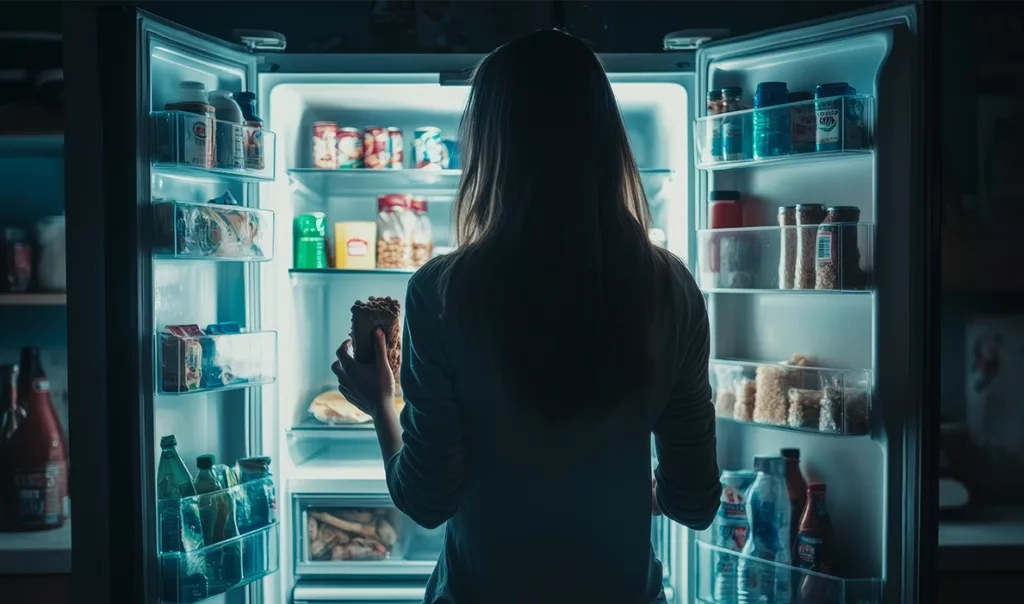
Binge eating is far more common than most women realise, I see it with 80–90% of the clients who first join Reclaim You. If you’ve ever found yourself raiding the cupboards, eating past fullness, and then feeling ashamed or angry at yourself, this post is for you.
You are not broken and you don’t need “more willpower.” You need to understand the cycle and learn the tools to step out of it.
What Binge Eating Is (and Isn’t)
Everyone overeats sometimes (think: Christmas dinner or pizza night). A binge is different:
- Feels compulsive or out of control
- Often happens quickly and/or in secret
- You feel numb/disconnected while it’s happening
- Followed by guilt, shame, and “start again tomorrow”
This isn’t a food failure. It’s a coping strategy your brain has learned.
The Real Culprit: The Restrict → Binge → Guilt Loop
Here’s how the cycle usually runs:
- Restrict
Low calories, cutting carbs, skipping meals, “being good.” Hunger signals ramp up. Energy dips. Food thoughts get louder. - Binge
Your brain wants fast energy (carb + fat). You eat quickly, past fullness, and feel out of control. - Guilt
“I’ve blown it.” You vow to “be stricter” tomorrow… which restarts restriction — and the loop repeats.
Blunt truth: the binge isn’t the root problem. Restriction is.
Physical vs Emotional Hunger (Know the Difference)
- Physical hunger: builds gradually, most foods sound fine, felt in the stomach, settles when you eat enough.
- Emotional hunger: arrives suddenly, craves specific foods, isn’t satisfied with fullness, linked to a feeling (stress, loneliness, boredom).
You can’t fix emotional hunger with food. You need to feel the feeling instead of feeding it.
The Toolkit: Practical Steps to Break the Cycle
1) Insert a 60-Second Pause (Name it → Need it)
Create a tiny gap between urge and action.
Ask (and write it down if you can):
- What am I actually feeling right now?
- Do I need food, or do I need something else? (rest, a cry, a walk, a call, a hug, a breath)
Even if you still eat, that pause builds awareness — the first crack in the loop.
2) Drop “Good/Bad” Food Labels
Moralising food fuels shame; shame fuels binges. Cake isn’t a sin; it’s a slice. Eat it, log it if you’re tracking, move on.
3) Feed Your Body Before It Panics
Regular, adequate meals reduce binges dramatically.
- Every 3–4 hours: protein + carb + fat + produce
- Don’t skip breakfast “because you’re not hungry” it often backfires later.
- Keep simple, repeatable meals so you’re not white-knuckling decisions all day.
Simple flexible template:
- Breakfast: Greek yoghurt + berries + granola
- Lunch: Protein wrap + salad + fruit
- Snack: Protein bar or skyr
- Dinner: Protein (chicken/salmon/tofu) + potatoes/rice + veg
4) Track Patterns (Not Just Calories)
Note when/where/why urges hit: after arguments, on Sundays, post-work drive, after skipping lunch, when overtired.
When you see the pattern, you can plan: different route home, earlier snack, boundary at work, a wind-down routine.
Journaling prompts:
- What happened 1–3 hours before the urge?
- What was I feeling? (Use 1–2 words.)
- What would help me feel 1% better right now?
5) Build an SOS Card (put it in Notes on your phone)
When the urge hits, I will:
- Drink a glass of water
- Breathe 10 slow breaths (inhale 4, exhale 6)
- Move for 5–10 minutes (walk, stretch, shower)
- If still hungry: eat my pre-decided snack (e.g., yoghurt + fruit / toast + eggs / protein bar)
- Send a “doing my next best choice” message to a friend/coach
6) After a Binge: Repair, Don’t Punish
- No restriction the next day (that restarts the loop).
- Return to regular meals.
- Note one learning (“I’d skipped lunch, set a 1 pm alarm”).
- Do something soothing that isn’t food: shower, outside air, early night, clean sheets.
Rebuilding Self-Trust (Micro-Promises)
You don’t rebuild trust with grand gestures. You rebuild it with tiny promises kept:
- Log one day of food → notice how it feels → repeat tomorrow
- Walk 10 minutes today → 12 minutes tomorrow
- Add protein to one meal → then two
Identity upgrade: “I’m the woman who follows through.”
Quick Reference: Your Anti-Binge Checklist
- ☐ Ate every 3–4 hours today
- ☐ Protein at each meal/snack
- ☐ 2–3L water
- ☐ 7–8 hours sleep planned
- ☐ 60-second pause practiced once
- ☐ One micro-promise made and kept
You’re Not Broken
Binge eating is not a character flaw. It’s a learned coping strategy. With regular nourishment, a pause, pattern awareness, and kinder self-talk, you can step out of the cycle — not overnight, but steadily.
Don’t start over. Pick up from here.
Want Structure That Actually Sticks?
Inside Reclaim You, we help you create a flexible plan that feeds your body, supports your emotions, and ends the all-or-nothing spiral. I’ve got limited coaching spots — DM me RECLAIM on Instagram or apply via the link https://tr.ee/Gt3-D_A5pe and we’ll see what’s right for you.